
Bonding & light curing: light distribution matters
LIGHT & BONDING
The quality of bonding also depends
on how the light is delivered.
Bonding veneers, composite restorations and crowns requires adequate light appropriate for the material. We use SmartLite Pro and Bluephase N G4, checking the light position, distance and exposure time.

The two curing lights used at Posselt Dental Clinic.
Light reaching a broad area evenly
A flashlight that is bright only at the center and dark at the edges cannot illuminate a broad area evenly. The coverage and uniformity of curing light also matter. SmartLite Pro has four LEDs and a 10 mm active light field.
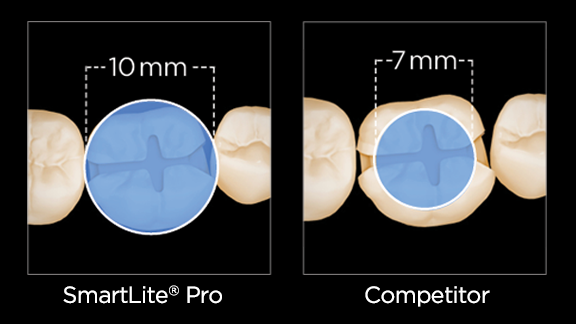
Manufacturer's material illustrating the 10 mm active light field.
See the light sources compared in our video here.
The manufacturer compared these light distributions under the same conditions. Colors indicate light intensity. SmartLite Pro's distribution illustrates light spreading across the active field rather than concentrating to one side.
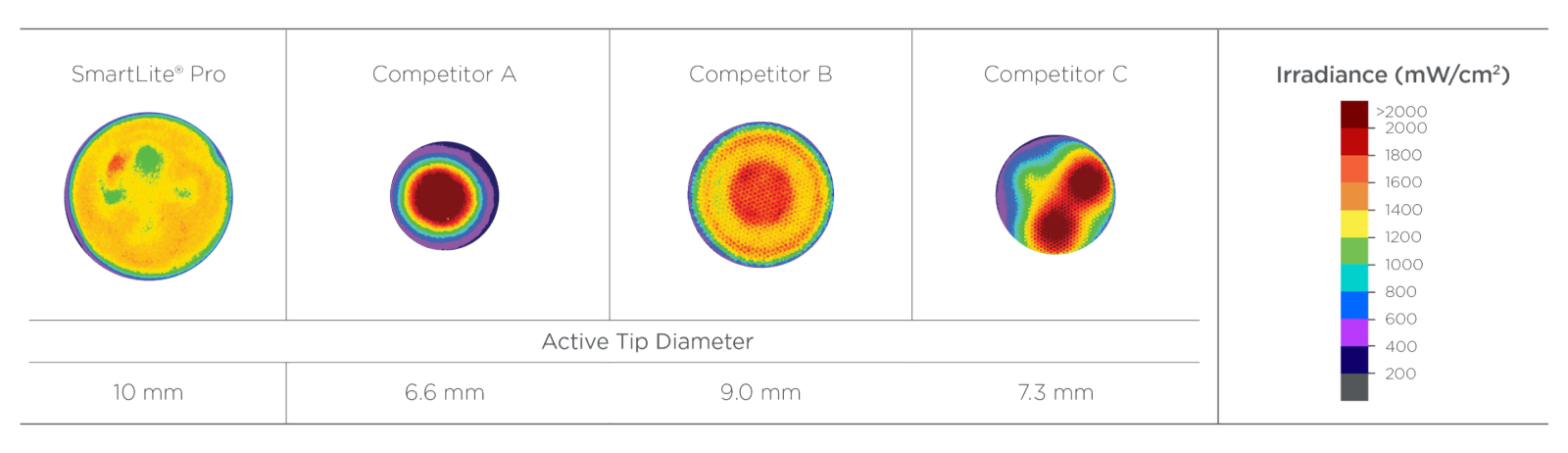
Dentsply Sirona manufacturer comparison: 0 mm working distance, measured wavelengths 350–550 nm. These findings apply to the devices and test conditions shown and do not establish superior clinical outcomes over all products.
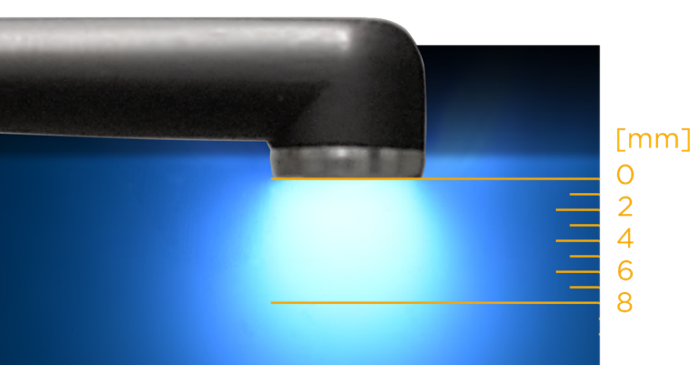
Manufacturer's material explaining light delivery.
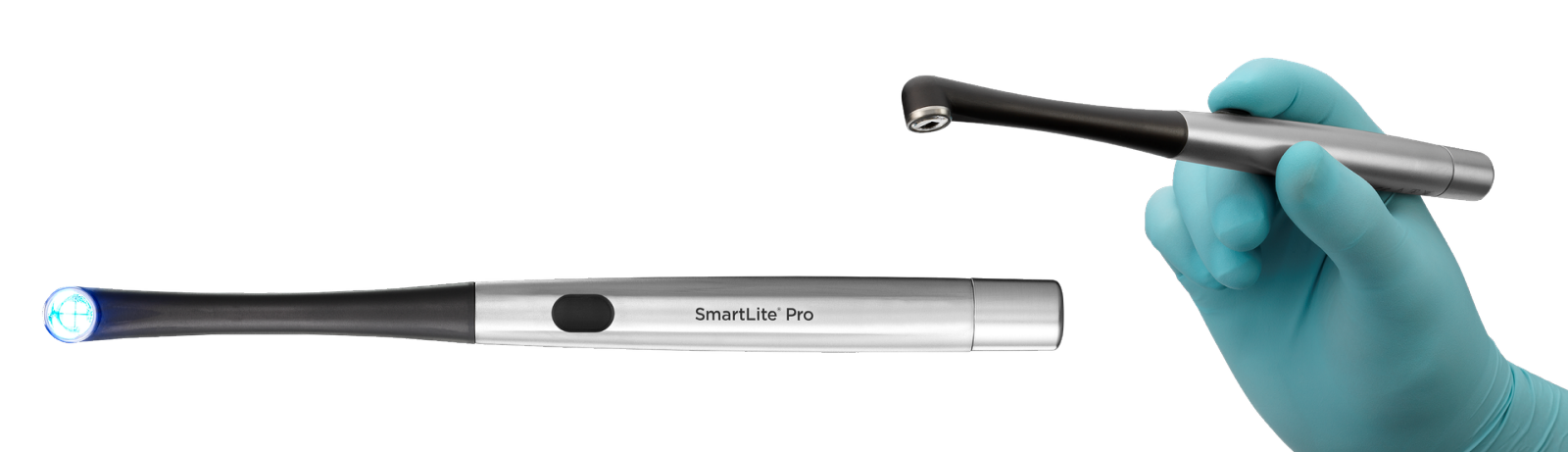
A use example showing adjustment of the tip position and angle.
We check the material, distance, angle and exposure time together.
A powerful light alone does not ensure adequate bonding. We follow the material's recommended conditions, keep the tip appropriately close and illuminate larger areas in sections. Equipment maintenance and light-output checks are also part of the process.
We also use Bluephase N G4.
Different curing lights are used according to the treatment and material. Surface preparation, moisture control, material selection and light exposure are assessed as one connected process.
SmartLite Pro manufacturer's light and technology information ↗