
Conscious sedation · preparation & recovery guide
← Posselt Dental Clinic homepage
POSSELT · CONSCIOUS SEDATION
Less anxiety.
Careful treatment and recovery.
If dental anxiety or lengthy treatment feels burdensome, discuss conscious sedation. Like sedation used for endoscopy, medication reduces anxiety and tension. Sedation depth varies, so it is adjusted while monitoring health and responses.
Careful medication delivery for a more comfortable experience.
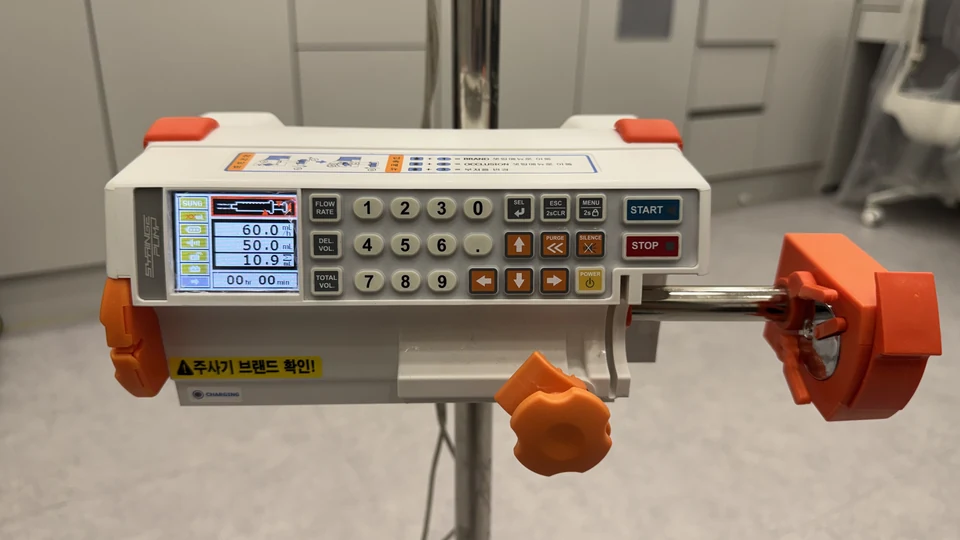
Our newly introduced syringe pump controls the medication infusion rate. Conscious sedation proceeds while we observe the patient's responses and breathing.
New syringe pump at Posselt Dental Clinic · actual equipment photograph
Planning sedation and pain management together.
We select suitable sedatives such as midazolam or propofol and use local anesthesia for pain at the treatment site. Injectable analgesics and medicines to reduce nausea or vomiting may also be used when needed. Types and doses depend on medications, health and treatment scope.
Checks from before treatment through to discharge.
Before treatment · Review medical conditions, allergies, medications and previous anesthesia experiences.
During treatment · Control the medication infusion rate with the pump and observe oxygen saturation, breathing and patient responses.
After treatment · Assess recovery, pain and nausea, and explain leaving with an accompanying adult.
Postoperative care tailored to the patient.
Anti-inflammatory pain medicines and acetaminophen, which reduces pain through different actions, may be combined when needed. Prescriptions account for stomach health and medications. Antibiotic type and dose are also selected according to infection risk and health.
After extensive surgery near the sinus, we assess nasal congestion, swelling, discharge and allergy symptoms. Nasal sprays or related medicines may be prescribed where appropriate, with recovery instructions such as avoiding forceful nose blowing.
Preparation before & after your visitReceive individual instructions on fasting and regular medicines when booking. Do not stop medicines yourself. Arrange to leave with an accompanying adult.
Avoid driving, alcohol and operating machinery on the treatment day; rest as instructed. Effects and recovery times vary by person.
Sedation differs from general anesthesia. Respiratory depression, low oxygen levels, nausea and vomiting may occur, so pretreatment assessment and observation during care are necessary. Some patients may not be suitable after assessment.